
Types of Bullying Explained [Parents and Teachers Guides]
Verbal, Physical, Social, Sexual, Cyber and Family Bullying
In this article, we will explore six types of bullying: verbal bullying, social bullying, cyberbullying, sexual bullying, physical bullying, and domestic bullying. At the same time, it is critical to understand how each type affects adolescents’ mental health.
Although allowing children to explore the world can enhance their confidence and problem-solving abilities, it also helps them develop social and interpersonal skills. As parents, we are often overprotective, worried that our children will face various vulnerable situations, and we prefer to keep them at home, relying on computer games or social media to develop their coping mechanisms. Parents not only worry about their children’s adventure bullying but also fear they might become bullies themselves. Therefore, we are going to discuss six common types of bullying behaviour that relieve parents’ anxiety. They are:
Types of Bullying
Verbal Bullying

Common bullying behaviour
This type of bullying involving repeatedly saying offensive contents to someone. Verbal bullying behaviour includes disclosure offensive contents include mocking, insulting, offending, cursing or using foul language, causing embarrassment, stress and shame in a work or learning environment.
Bullying Warning signs
Since bullies do not stop their bullying behaviour, they continue to use abusive content to enhance their own reputation. The more victims are exposed to this hellish environment, the more their self-confidence is undermined.
Victims who have been in a verbally abusive environment for a long-time experience less responsive. In addition, due to their lack of self-expression skills, it is difficult for them to communicate clearly and fluently. Victims feeling like a burden or wanting to disappear could be a warning sign of serious symptoms.
Physical Bullying

Common bulling behaviour
These types of bullying involving fighting, pushing, shoving and tripping others. In addition, bullies may also destroy, damage or steal the personal belongings of others. Bullying behaviour can be carried out by an individual or a group.
Bullying Warning signs
Such harassment can result in internal and external injuries. External injuries include bruises and cuts, while internal injuries mainly consist of fractures.
Social Bullying

Common Bullying behaviour
These types of bullying refers to the repeated act of isolating an individual from victims personal or groups activities. Social bullying develops silent personality, refusing all social interaction with the victim, and ultimately encouraging others to join the isolation.
Bullying Warning signs
Social bullying is a powerful destructive bullying behaviour as they unable to understand the underlying reasons, ultimately causing victims feel overwhelmed. Social isolation can damage a person’s relationships and reputation within their community. Its aim is to undermine the victim’s credibility, authority, and reputation in their industry or community, ultimately isolating them. Day by day, bullies can cause victims to lose confidence at work or in their studies.
Sexual Bullying

Common bullying behaviour
These types of bullying includes both physical and emotional harassment. The emotional behaviour in sexual bullying includes discussing sexual topics without consent or posting sexual videos, messages or photos on social media with the intent to embarrass the victim. As for physical harassment, the victim may be forced to participate in sexual acts. On the other hand, the victim may be compelled to take part in games during certain celebrations, such as undressing, kissing or hugging people they are not familiar with.
Bullying Warning signs
In cases of sexual harassment and bullying, it is difficult to identify the victims of sexual harassment because the signs of bullying are not obvious. Therefore, teachers, parents, or friends should pay special attention to whether they display different social, behavioral, or emotional signals.
Paying attention to the early warning signs of bullying victims and helping them emerge from darkness back to normal life is crucial for the lifelong development of adolescents. Victims of sexual bullying may experience sudden emotional changes, shifting from normal to sadness, frequent crying, and loss of self-confidence. At school, victims may lose interest in participating in activities, frequently be absent, show an obvious decline in academic performance, avoid social interaction, or become silent, especially regarding things they were most interested in or excessively dependent on or afraid of facing dedicated people. Physical warning signs include body trembling and nail-biting.
Cyberbullying
Common bullying behaviour
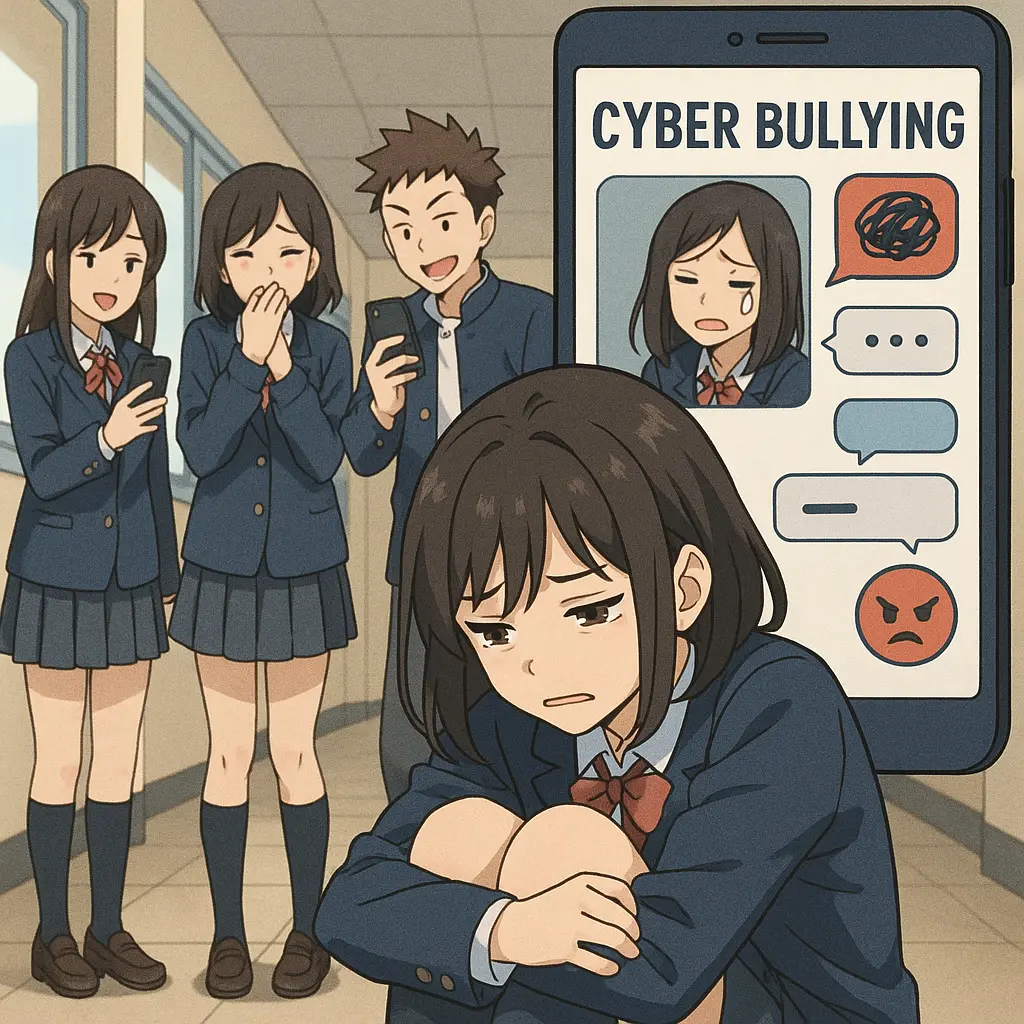
Cyberbullying is becoming a form of modern bullying. It includes sharing unauthorized materials, sending threatening or insulting texts or messages, tampering, exaggerating, spreading false content or rumors, making unfounded public accusations, distorting facts for personal purposes, or deliberately concealing the truth to prevent public awareness, causing the victim to feel upset and depressed. Additionally, it may involve publishing private information, such as photos or videos. This type of harassment may contain sexual content, causing the victim to feel ashamed, embarrassed, and humiliated, and deliberately leading to the loss of the victim’s reputation in society.
Bullying Warning signs
Due to the nature of the internet, cyberbullying can occur at any time, unaffected by geographical limitations. It revealed that cyberbullying could be committed by everyone, and cyberbullying is not limited to specific individuals; anyone can perpetrate it or fall into it at any time. Victims of cyberbullying often blame themselves due to self-neglect and a lack of attention to online safety. Early warning signs for victims of cyberbullying include deleting social media accounts, blocking contacts without reason, and isolating themselves from social media. Some victims may feel fear, panic, anxiety, and stress when using social media, especially upon receiving notifications. As victims do not understand the reasons, they may avoid many enjoyable social activities and lose interest in maintaining normal routines.
Family Bullying
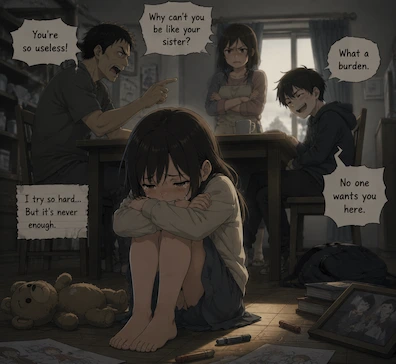
These types of bullying is a complex form of bullying. Family bullying, or domestic bullying, as the name suggests, refers to bullying that occurs within the family.
Family bullying could often involve physical, sexual, verbal or social bullying, bullying. Unfortunately, many of us always overlook the consequences of family bullying.
Domestic bullying is quite complex, as it is always accompanied by various family issues such as financial, marital, and adolescent problems, making it more difficult to manage and resolve. Therefore, we must be extra cautious and take additional preventive measures to prevent domestic bullying, reduce its impact, and ultimately avoid it developing into catastrophic events that have a significant effect on society. Furthermore, as the family represents a place of safety and love, domestic bullying has profound and lasting effects on the victims.
Family bullying sounds are not a focus topic in society. It is because there are few people who are brave enough to report themselves being accused of bullying by their family members. Therefore, the figures of family bullying are always low when compared with other types of bullying.
Common bullying behaviors
Physical family bullying occurs when adolescents experience violent behaviors within the family, including fighting, pushing, shoving, and tripping, which may cause physical injuries such as fractures.
For adolescents who suffer verbal bullying, including mockery, insults, offensive language, and cursing, this may make them feel embarrassed, stressed, and ashamed, forming verbal domestic bullying.
For adolescents who experience sexual harassment, including family members discussing sexual topics, sharing pornographic videos and photos, and sending messages that make the victim feel embarrassed, it forms sexual domestic bullying.
Adolescents who experience social bullying are often isolated for defying family instructions, which can lead to feelings of loneliness and contribute to the development of social and domestic bullying.
Like other types of bullying, victims of domestic bullying may experience similar emotional, physical, and behavioral symptoms. These symptoms may include sadness, anxiety, depression, feelings of helplessness, low self-esteem, fear of making mistakes, and changes in sleep patterns.
Bullying warning signs
Most teenagers spend a third of their time at school. Therefore, it is essential for teachers to observe whether they are being bullied at school or at home, and some early warning signs of bullying can help detect whether they are experiencing it.
Early warning signs of bullying include changes in the victim’s personality, such as becoming silent instead of lively, despairing instead of optimistic, or quiet instead of talkative.
Moreover, they may overly rely on interacting with teachers to avoid being alone. Sometimes, victims are fearful of leaving the school after lessons or do not want to go to school in the morning.
Furthermore, they lose interest in things they usually enjoy. They tend to isolate themselves, deliberately avoiding contact with others and participation in interactive activities. Over time, there is a significant decline in academic performance, which is a sign that they may be suffering from family bullying.
Conclusion
In bullying, the bully always has a hegemonic ambition. It is a common practice that not only happen in the infant, childhood or adolescence, but also in workplace or in the family. Human begins do maintaining a high-level desire and achieving a high-level reputation by using consistent violence behavior.
Frequently Asked Questions
Bullying is unwanted, aggressive, and repeated behavior, causing teens to feel unhappiness, frustration, fear, anger, depression, anxiety, low self-esteem, and mental disorders. It is difficult to understand how bullying behavior delivers any advantages for the bully. Most frequently, bullies love to cultivate power, popularity, status, social standing, attention-seeking, moral ambiguity, self-supremacy, and antisocial personality.
Verbal bullying involves repeatedly saying contents like mocking, insulting, offending, cursing, causing teens to feel embarrassment, stress and shame.
Physical bullying involves the act of fighting, pushing, shoving, and tripping, destroying or stealing the others’ personal belonging, resulting in teens’ internal or external injuries, such as bruises, cuts and fractures.
Sexual bullying involves physical and emotional harassment. Emotional harassment involves the act of talking or spreading sexual content to the public, like sexual videos, messages, topics, or photos, causing teens to feel annoyed, depressed, and embarrassed.
Physical harassment involves the act of unwanted touching or kissing teens’ private parts and playing sex games, such as taking off clothes in some activities. Victims feel hopeless, depressed, afraid of facing people, have low self-esteem, and blame themselves for their own carelessness.
Social bullying involves the act of isolating teens from their social activities. It includes direct or indirect interactions. Direct interactions include developing a silent environment and refusing all social interaction. Indirect interactions include spreading false rumors and encouraging others to join isolation. Victims feel annoyed, depressed, and hopeless since they don’t understand the reason for being isolated.
Cyberbullying involves the act of spreading unauthorized, threatening, insulting, tampering, exaggerating, false, or distorting facts and unfounded public accusations in texts or messages. Teens feel ashamed, embarrassed, and humiliated, which ultimately reduces the trustfulness of their social relationships.
Family bullying involves verbal, physical, and sexual bullying. Children and parents are involved in family bullying. It is difficult for us to identify the victims, as they are usually afraid of prosecuting their parents.
More about Bullying
Complete guide to bullying prevention
